The problems it solves
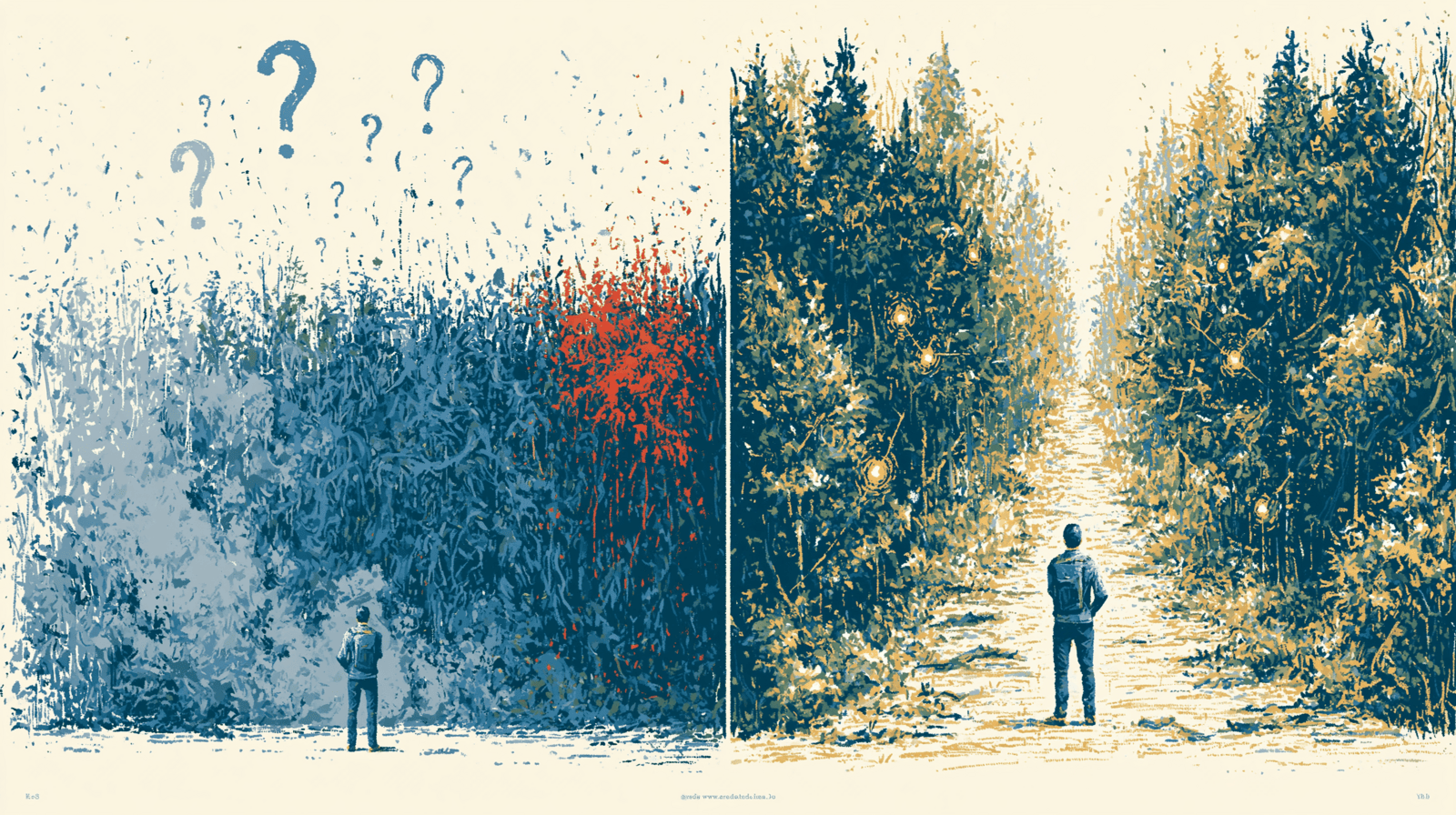
Most organisations manage skills through a fog. The information exists — in people's heads, scattered across CVs and review documents — but nobody can see it. The forest replaces the fog with a map, and a few chronic problems dissolve on contact.
Reviews made of adjectives. "Shows real growth." "Strong performer." Nobody can compare that year over year, and both sides of the table know it. With a forest, a review reads "moved three skills to confident, holds the mid-rank set" — concrete, comparable, and visible to both sides before the meeting starts.
Promotions without a bar. "Is she ready for senior?" is a debate when senior is a feeling. When a rank is a defined set of skills at defined levels, readiness is something you check, not argue about — and the person can see the exact shape of their next step all year long.
Invisible gaps and single points of failure. The skill only one person holds is invisible right up until that person is on leave, busy, or gone. A forest shows coverage at a glance: which skills are thin, which have one owner, where the next project will hit a wall.
Hiring by buzzword. Job ads list technologies; interviews probe vibes. A forest defines an opening by what a hire must actually walk in knowing (the roots and entry rank) versus what the role will teach them — a sharper filter for everyone, including the candidate.
Learning without direction. "I should learn more" is a mood, not a plan. A forest turns it into an ordered path: these skills, in this order, a few at a time.