Planning growth
A team's development plan shouldn't need inventing — the map, read against the future, mostly writes it. Three inputs:
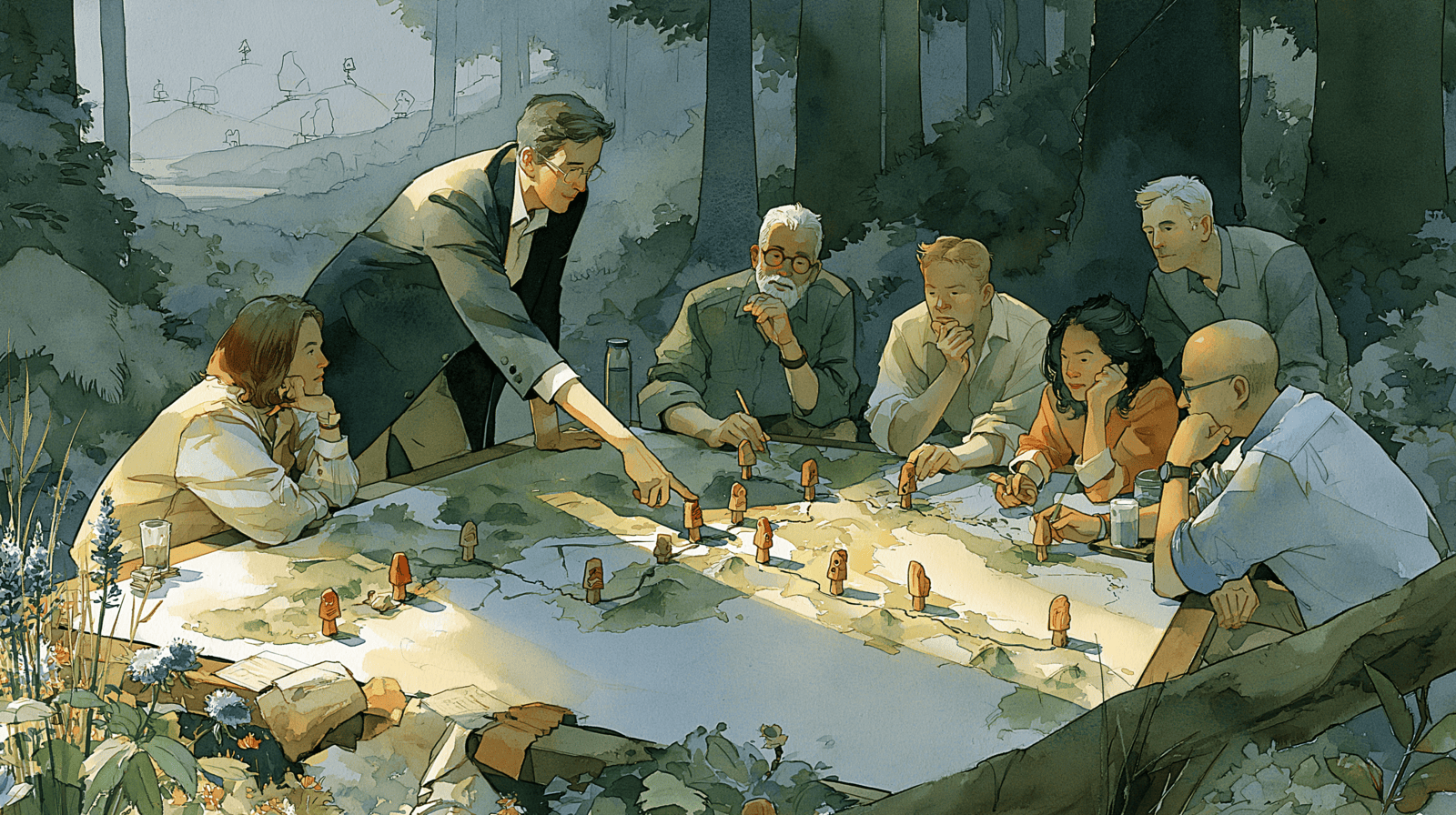
Match the forest to upcoming work. Take the next projects on the horizon and read off the skills they'll demand. Compare against current coverage. The shortfall is the plan — and because prerequisites and roots dictate learning order, the map even sequences it. "We need two confident owners of X by spring, and X requires Y, so Y starts now" is planning at its least mysterious.
Grow people toward the next rank. Each person's target rank is a concrete set of skills — so "develop your people" stops being an abstract duty and becomes specific: these skills, for this person, in this order. The beauty is that personal ambition and team need mostly align; the rank was defined to describe what the team values.
Spread risk deliberately. Wherever the heat map shows a single point of failure, grow a second owner before you need one. This is the cheapest insurance a team can buy: the learner gains a valuable skill, the current owner gets the expert-making experience of teaching it (teaching-back — the confident→expert test), and the team sleeps better. One decision, three payoffs.
Braid the three inputs together per person — what the work needs, what their next rank asks, what risk demands — and keep each person's active set to the usual three-to-five skills. The result is a growth plan tied to real work, honest about order, and legible to everyone on the map it came from.